
COLONIAL ATTEMPTS AT FIGHTING GALAMSEY
Colonial Attempts to fight galamsey
The land now known as Ghana was once called the Gold Coast for a simple reason: it was one of the richest gold-bearing regions on the African continent. For centuries, local communities mined gold using traditional methods such as panning in rivers, digging shallow pits, and extracting ore with basic tools. These activities were organized, culturally rooted, and socially accepted.
Importantly, there was no industrial-scale mining on the Gold Coast for most of its history. Traditional miners dominated gold production, and their work formed the backbone of local economies. This changed in the late 18th and early 19th centuries when British colonial authorities opened the door for large European mining companies to operate. These companies introduced industrial-scale technologies and formalized mining leases. In doing so, they redefined the landscape of mining and gradually pushed traditional miners to the margins. 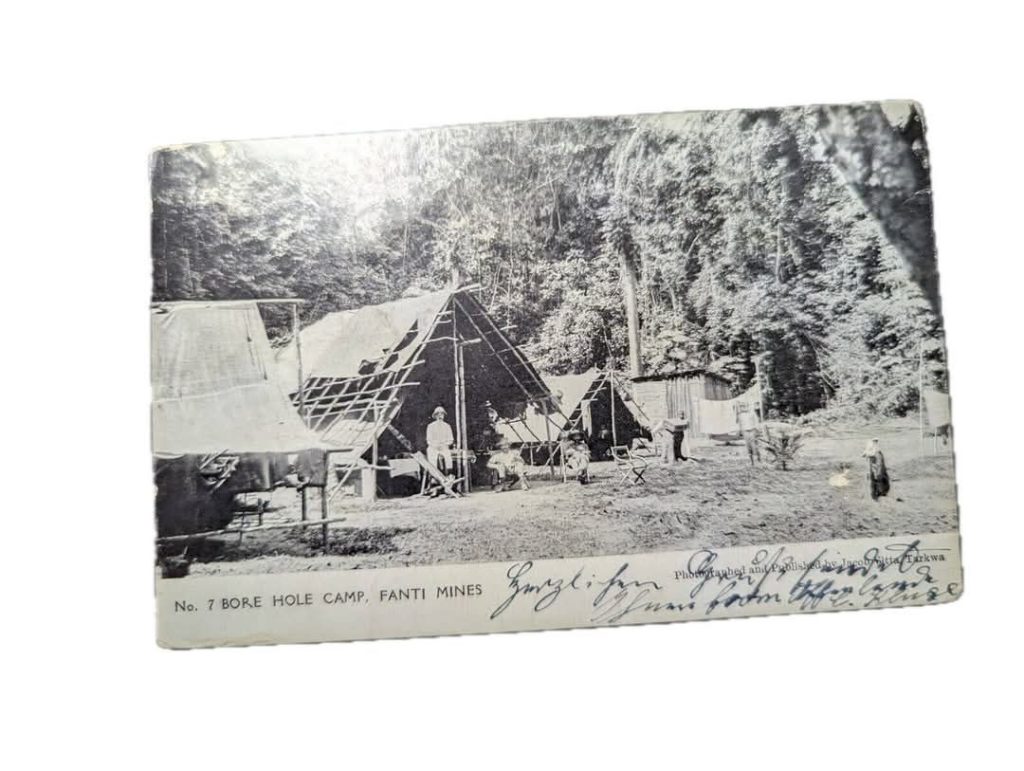
Although indigenous miners had operated long before colonial rule, the new regulatory systems declared mining without formal leases or documentation as illegal. From then on, thousands of local miners unable to navigate new bureaucracies or acquire formal concessions were suddenly labelled as criminals.
Colonial Efforts to Stop Indigenous Miners
Throughout the early 1800s to the late 19th century, British authorities attempted several strategies to suppress traditional mining:
- Raids by security forces
- Arrests and prosecutions of small-scale miners
- Attempts to push miners away from company concessions
The aim was clear: protect European mining investments and control gold exports. Yet, these interventions did not eliminate indigenous mining. Communities continued to mine discreetly, sustaining what we now call galamsey.
When Ghana gained independence in 1957, many expected reforms. But the new state largely inherited and maintained the colonial mining framework. Industrial mines remained central to national revenue, and indigenous miners continued to be viewed as illegal operators.
From the 1960s through the 1970s, the state continued periodic crackdowns used by the Europeans. Despite these efforts, local miners were not deterred. Mining remained a vital livelihood option, especially in a period marked by economic instability, inflation, and limited rural employment.
The Turning Point: The 1980s and Ghana’s Realization
By the early 1980s, it had become obvious that:
- Indigenous mining could not be eliminated through force or deterrence.
- Millions depended on artisanal mining for survival.
- The mining laws were out of touch with long-standing traditional practices.
The state recognized that branding all indigenous miners as “illegal” was ineffective and counterproductive. This new understanding led to a major policy shift.
In 1989, Ghana passed landmark reforms; most notably the Small-Scale Gold Mining Law (PNDC Law 218). For the first time, the state officially acknowledged traditional mining as small-scale mining, giving locals a legal pathway to operate.
This was a significant milestone because it legitimized a practice that had existed for centuries. It also aimed to reduce illegal operations by making formalization possible. It then marked the state’s acceptance that galamsey was not simply a criminal act but a deep-rooted livelihood system.
After the 1989 formalizations, a great deal of people was unable to formalized their operations. Remember that it was the intention of the state to have all small-scale mining under its control for revenue mobilizations, so those who operated outside the formal means continued to bear the illegal mining armband. The then late President Jerry John Rawlings would order military crackdowns on areas identified as not complying with the formalization approaches.
The former president John Adjekum Kuffour equally deployed the military in September 2006 in his attempt to stop people who were not regularizing their operations with the state.
Despite all these actions, galamsey was not stopped for the following reasons:
- It was their ancestral livelihood: mining was how families survived long before colonial rule.
- Colonial laws shut them out: regulations favoured foreign companies, leaving locals no legal way to mine.
- No real alternatives: rural communities depended on gold for income, so they kept mining to survive.
- Enforcement couldn’t stop them: simple tools, hidden pits, and community support helped them return after every raid.
- The requirements for formalization were heavily controlled by the state, and was difficult to acquire license to mine.
As its seen, the history of galamsey is a story of conflicting systems; traditional livelihoods versus state and corporate control. From the Gold Coast era through independence and into the 1980s, the pattern has been the same: attempts to suppress indigenous mining have consistently failed because they ignored the social, economic, and cultural foundations of the practice.
Understanding this long continuum is essential for designing modern anti-galamsey strategies. Any effort that overlooks history is doomed to repeat past mistakes.