
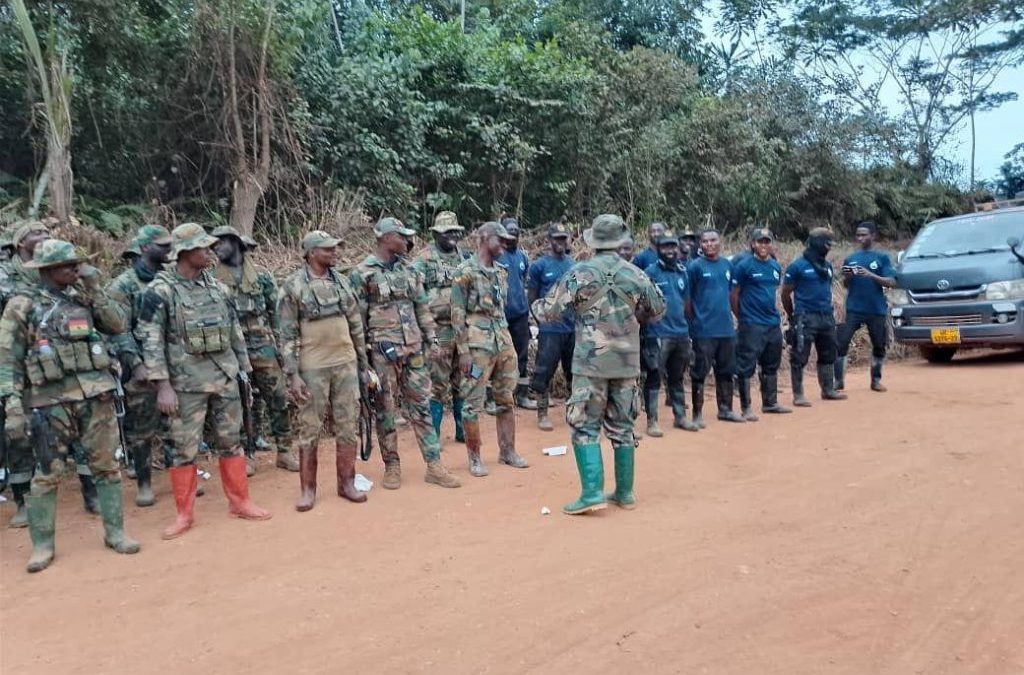
Since 2013, Ghana has thrown almost every weapon at galamsey, except the one that matters most: confronting the underlying causes that keep expanding it. We have formed taskforces and renamed others. Operation Vanguard, Operation Halt, Blue Water Guards, NAIMOS, drones, Galamstop. Joint taskforces have stormed sites at dawn. Excavators have been seized and burnt. Changfans have been destroyed. Makeshift camps have been razed. Hundreds of miners have been arrested. Some military officers have even lost their lives in clashes with armed groups protecting illegal sites. Public funds have gone into operations, fuel, intelligence, allowances, and emergency anti-galamsey campaigns.
Yet, when anyone stands at Shama Apo or on the Ankobra Bridge, the story remains the same. The Pra River, the Ankobra River, and others such as the Offin River remain brown, choked, and exhausted. The abandoned pits in many galamsey communities such as Prestea and Asanco areas, which continue to trap and kill miners, remain uncovered. Cocoa farms swallowed by galamsey show no signs of restoration. No river has returned to life. No forest has been reclaimed in any meaningful way.
So why? Because Ghana has chosen to fight the people who make the easiest headlines; the labourers in the pits, while ignoring the people who make the whole business possible. We arrest the man carrying gravel, but not the landlord who gave out the land. We chase the boy washing soil in the stream, but not the financier who paid for the excavator. And we rarely ask why, despite arrests, shootings, and burnt machines, the labourers keep returning. Until those questions are answered, the rivers will stay brown. Here are our top 6 reasons not a single river or forest is recovered.
1. Landowners are exempted from the arrest list
Landowners hold the real power to either stop or expand galamsey. No miner simply walks into a cocoa farm or forest reserve and begins digging without permission from the person or authority controlling that land. Behind every galamsey site is a landowner who agreed.
That makes their role central, yet they are often absent from arrest lists. If arrests are our main tool, then those who release land for illegal mining should be first in line, because without them the labourers would have nowhere to mine.
2. Rural poverty remains untouched
Another reason the current approach will fail is that there is no serious state policy to reduce systemic rural poverty in galamsey areas. At a community near Hiawa, Nana Kwasi Assan says he watched his parents spend their entire lives on cocoa farms and remain poor. The farm fed the country, but not the family. They struggled for meals, healthcare, proper shelter, and school. His mother died one morning carrying cocoa, after decades of work that brought little dignity. Then a galamseyer bought their cocoa farm. That one decision changed everything. The family bought land at Wassa Akropong. He bought five Pragyas for commercial transport. They built a five-room storey building with shops. For him, selling the farm was painful, but watching their father grow old in the same poverty that killed their mother was worse. No anti-galamsey operation addresses that reality. And so many families continue to sell farms, not because they hate forests, but because they are choosing survival over sentiment.
3. North-to-south migration feeds the pits
The current approach also ignores the steady movement of young people from northern Ghana into mining areas. For years, Kumasi and Accra acted as buffer zones. Young people from the north came south looking for work. Many women became kayayei or worked at chop bars. Many young men weeded compounds, worked on cocoa farms, or did casual labour. Eventually, many drifted into galamsey communities. Today, anyone who has followed galamsey closely knows a large part of the labour force comes from the north or Volta. For many of them, galamsey is not just work; it is the first time money has changed their family story. A week in the pit can earn more than several months of farm labour. Once that happens, occasional arrests become just part of the work. As the military chases them from one site to another, little is being done to create sustainable alternatives in the north to prevent the migration in the first place.
4. Role of neighboring African countries remains ignored
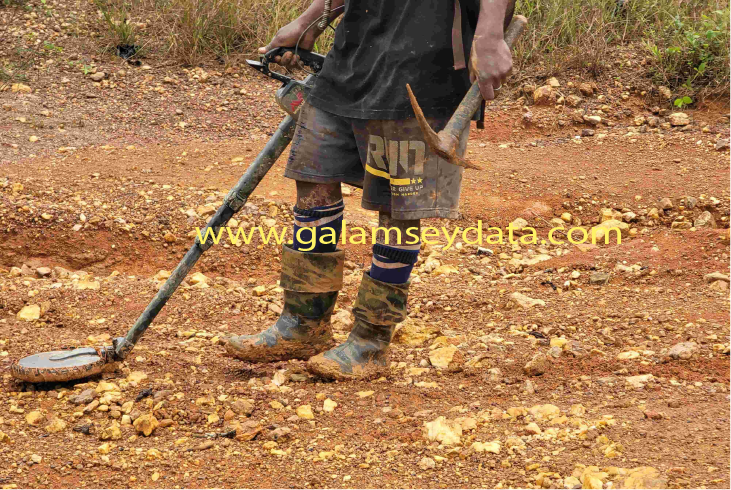
Other Africans are credited with tech that advance illegal mining
The galamsey fight has also remained strangely silent on the role of neighboring African nationals. Burkina Faso nationals are widely associated with introducing what miners call the “pee-pee” device; a small mobile detector that identifies gold-bearing ground.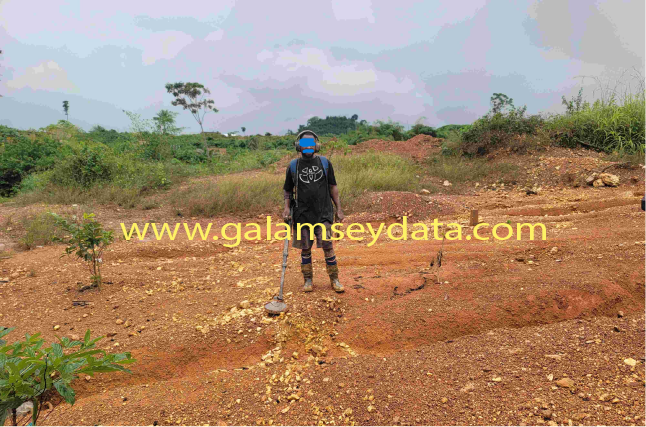
Once it sounds, mining starts immediately. No permit. No survey. No delay. Many also supply fuel gallons, pumps, hoses, makeshift building materials, drugs, and other logistics that keep sites running. Some operate as the invisible service chain around the pit economy. If there is no deliberate effort to track how these workers enter, where they settle, and who employs them, military swoops alone will never stop the flow. As one Nigerian worker named Abuka said at Wassa Gyapa: “It is now normal to hear from the taskforce once in a while. It is part of the risks in this work.”
5. Governments alternative livelihoods misunderstand galamsey economics
Government livelihood alternatives are often disconnected from what galamsey has become economically. Many people in galamsey are living at the level of middle-class households in Accra or Kumasi, and some even beyond. Cash moves quickly. They build houses. Buy vehicles. Open shops. Pay school fees. Support extended families. So when a person earning Gh₵4,000 a week from carrying loads or operating a changfan is asked to quit and start snail farming, grasscutter rearing, or subsistence vegetable farming, the offer sounds unserious. It is like asking a taxi driver to park his car and start selling coconuts.
6. How Galamseyers are voting, gets politicians panicking.
Finally, galamsey has grown into a political economy that punishes those who genuinely try to confront it. Entire local economies now depend on it. Food vendors, landlords, machine owners, spare-parts dealers, transport operators, and youth groups all earn from the chain. In some communities, galamsey is the local economy. Any government or Member of Parliament that disrupts that economy risks losing votes, and the 2020 and 2024 elections was visibly clear. In the Western Region, all NPP MPs except Mireku Duker of the Tarkwa Nsuaem Constituency, lost their seats in all galamsey areas. The 2024 elections was even historic. The NPP lost all the seats in each galamsey zone in the region. The NDC is picking lessons and is also handling galamsey as the NPP did post 2020. So that fear partly explains why the same military-heavy approach continues year after year, even when it has produced no single visible ecological recovery of either forests or rivers. The military has become theatre. It creates the image of action.
But rivers do not recover because soldiers entered a forest. Forests do not regrow because excavators were set on fire. If the same strategy has been used for over a decade and not one major river has returned to its natural state, then the problem is not a lack of force. The problem is that force is being used against the wrong end of the chain.